Showing 1 - 10 of 1657
Geraldine “Jerrie” Mock touched down in her Cessna 180 at Port Columbus Airport in Ohio, on April 17, 1964, completing the first round-the-world solo flight by a woman. Having departed on March 19, she accomplished her 23,103 mile (37,180 kilometer) journey in 29 days, 11 hours, and 59 minutes.
Jim Dean's contributions to the Museum’s art collection and NASA are invaluable. Dean left an indelible mark in the fields of art and science as our Museum’s first art curator from 1974 to 1980 and as director of the NASA Art Program from the early 1960s to 1974.
On January 25, 1925, J.H. Klein Jr., the commander of the airship USS Los Angeles, described an incredible sight he had witnessed to the Boston Globe. He described his experience and stated it was, "A most spectacular sight. The sky at the horizon was a flood of merging orange and red light. Overhead the ceiling was blue-black, while all about was the darkness of twilight.” This incredible event occurred during the 1925 solar eclipse off the coast of New York City, and scientists and crew aboard the USS Los Angeles had a front row seat to the beauty and splendor of the occurrence.
Born in Weatherford, Oklahoma, to a dentist and a former schoolteacher on September 17, 1930, Lt. Gen. Thomas Stafford (USAF) grew up under the first transcontinental airline route. As a child, he would watch silver DC-3s streak across the sky and think “I want to do that.”
The Museum’s Explainers—a cohort of high school and college student interpreters—are working together to create an original set of “trading cards” featuring images of the 1929 Women’s Air Derby contestants and details about their participation. The Explainers hope to inspire genuine, lasting personal connections with the rich, but often unsung, history of women’s active participation in aviation and space.
Something was different about the class of astronaut candidates introduced in January 1990. Eighteen men and five women emerged from almost 2,500 applicants as Astronaut Group 13; seven were pilots and 16 were mission specialists. That was not unusual. The difference was that three of the women were military officers.
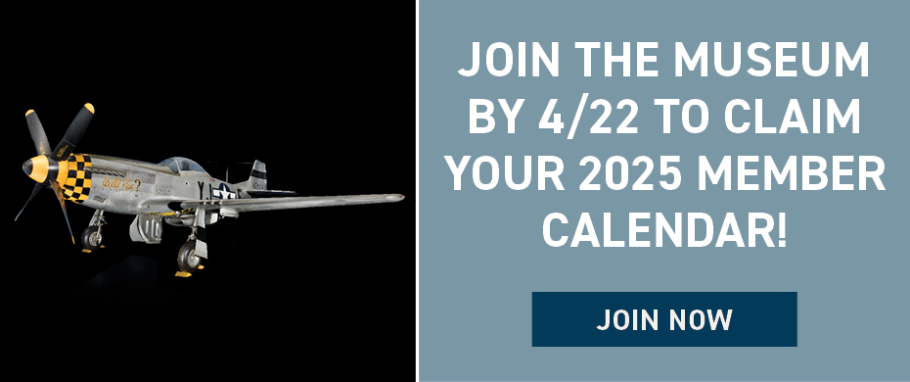
The Museum's Preservation and Restoration Unit recently prepared the P-51D Mustang for display in the new and upcoming Jay I. Kislak World War II in the Air gallery. The Mustang needed to suspended dynamically from the ceiling as if it were in flight.
Take a closer looks at details on the Star Trek starship Enterprise studio model from the original series, and learn more about the conservation process.
Every year, a valley in New Mexico becomes the launching ground for the largest hot air balloon event in the world.
When it comes to choosing a do-it-yourself project, Adam Savage doesn’t go for the easy stuff—he builds his own spacesuit.