Ever since our colleagues over at the National Zoo introduced their seven beautiful lion cubs to the public, some of the staff here at the National Air and Space Museum have been feeling a bit envious. Yes, we have priceless historic artifacts like the 1903 Wright Flyer and the Spirit of St. Louis; but lacking a single lion cub or even a panda, we do have something of a cuteness gap - we simply can't compete with the Zoo when it comes down to Cute.
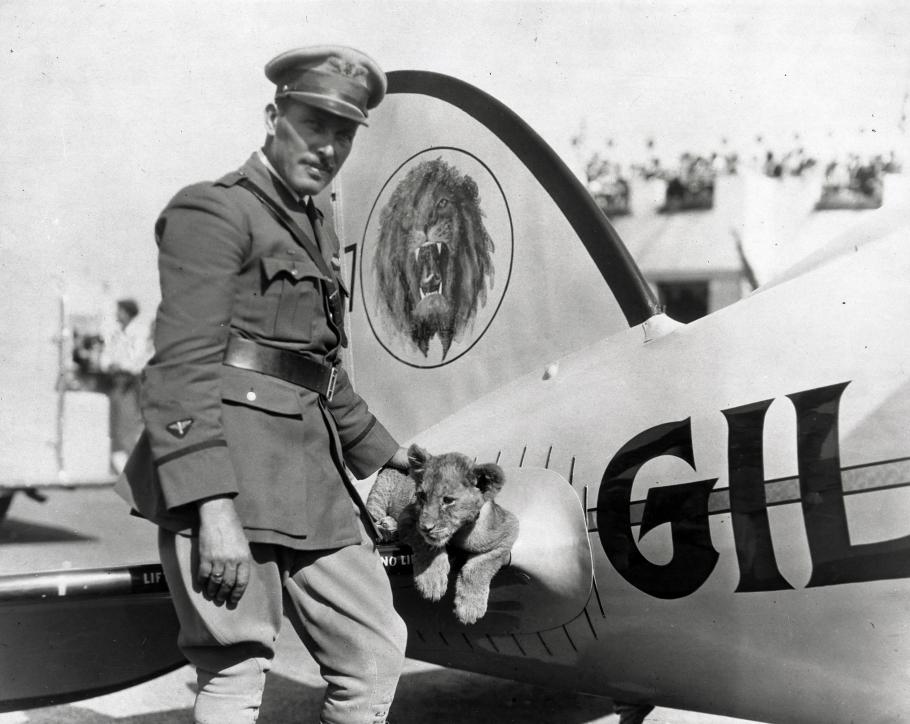
But a sifting of the files in the Museum's Archives Division actually turned up a respectable number of lion cubs in photographic form. The most famous of them is Gilmore, shown above, posing with his partner Roscoe Turner (1895-1970) on Turner's Lockheed Air Express 3. Turner was one of the most memorable figures from the Golden Age of flight - winner of the Bendix Trophy and three-time winner of the Thompson Trophy, he was known for his splendid custom-designed uniforms. In 1930, Turner was flying for the Gilmore Oil Company, which used a lion's head as its trademark. Thinking that having a real lion might boost publicity, he adopted a 3-week old cub and named him after the company. Little Gilmore was an immediate hit with the public, and with the possible exception of the Cowardly Lion in The Wizard of Oz, Gilmore became the most famous lion of the 1930s.
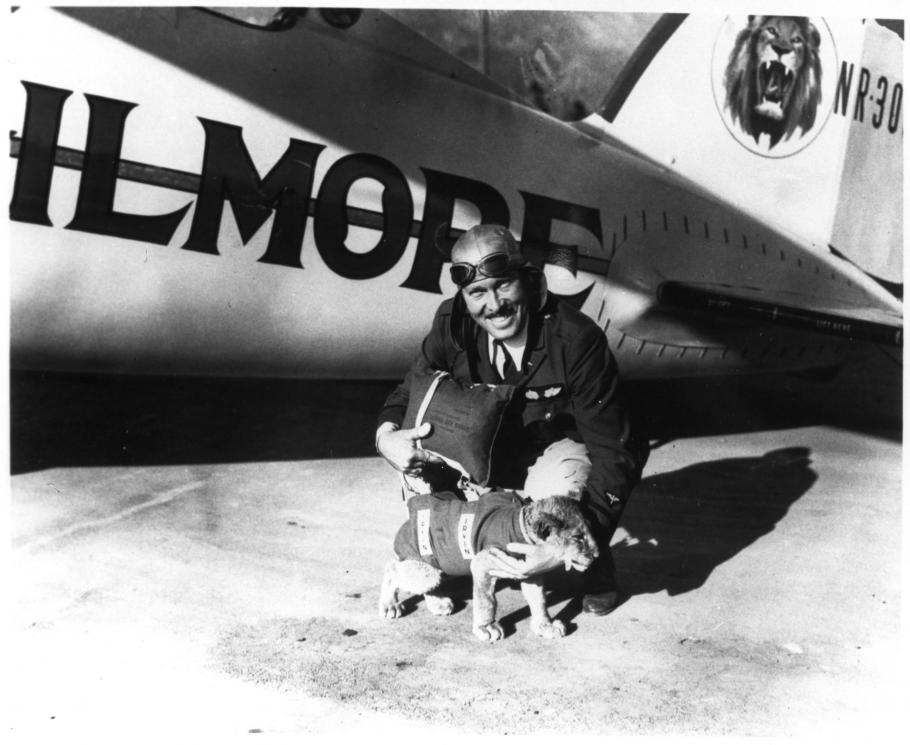
But Gilmore was not immediately charmed by the idea of flight. Roscoe told the story of the cub's first flight:
He was a pretty tired and nervous little cub when it was over. He was all right until we began to take off, but the moment the plane left the ground he made one terrified dive for Mrs. Turner's lap and stayed there. It was weeks before he stopped trying to scramble in someone's lap when we took off...
The Humane Society raised fears of Gilmore's in-flight safety, so Roscoe had a cub-size parachute and harness made for him. He's wearing the 'chute in the photograph above, and...
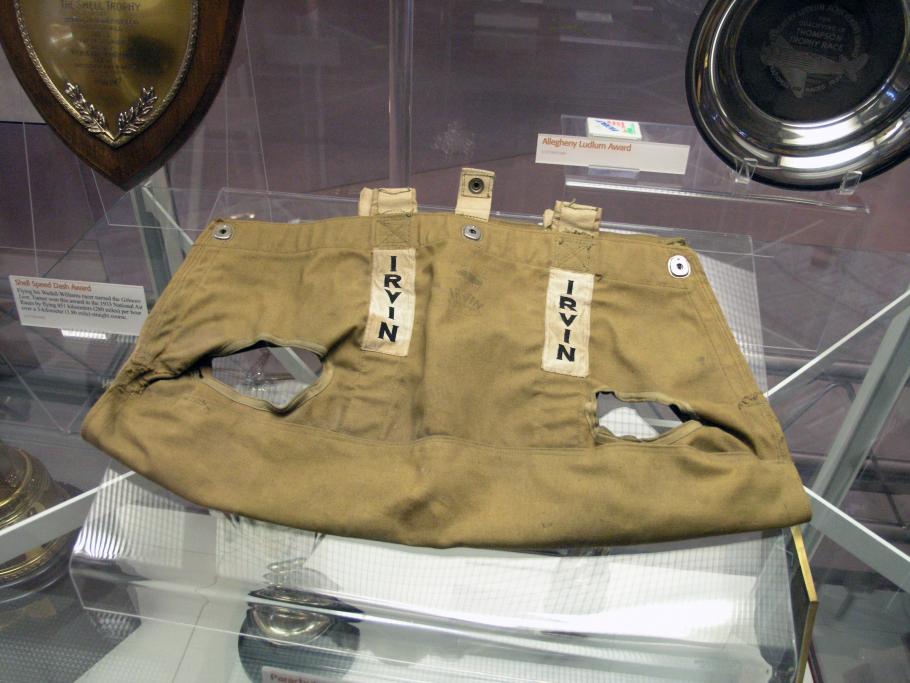
... Gilmore's parachute and harness are on display at the Museum's Udvar-Hazy Center. Gilmore quickly became a confident flyer, logging over 25,000 miles in the air and working the stick with Roscoe's assistance, but in turbulent weather, he would still curl up in Roscoe's lap. But it wasn't long...
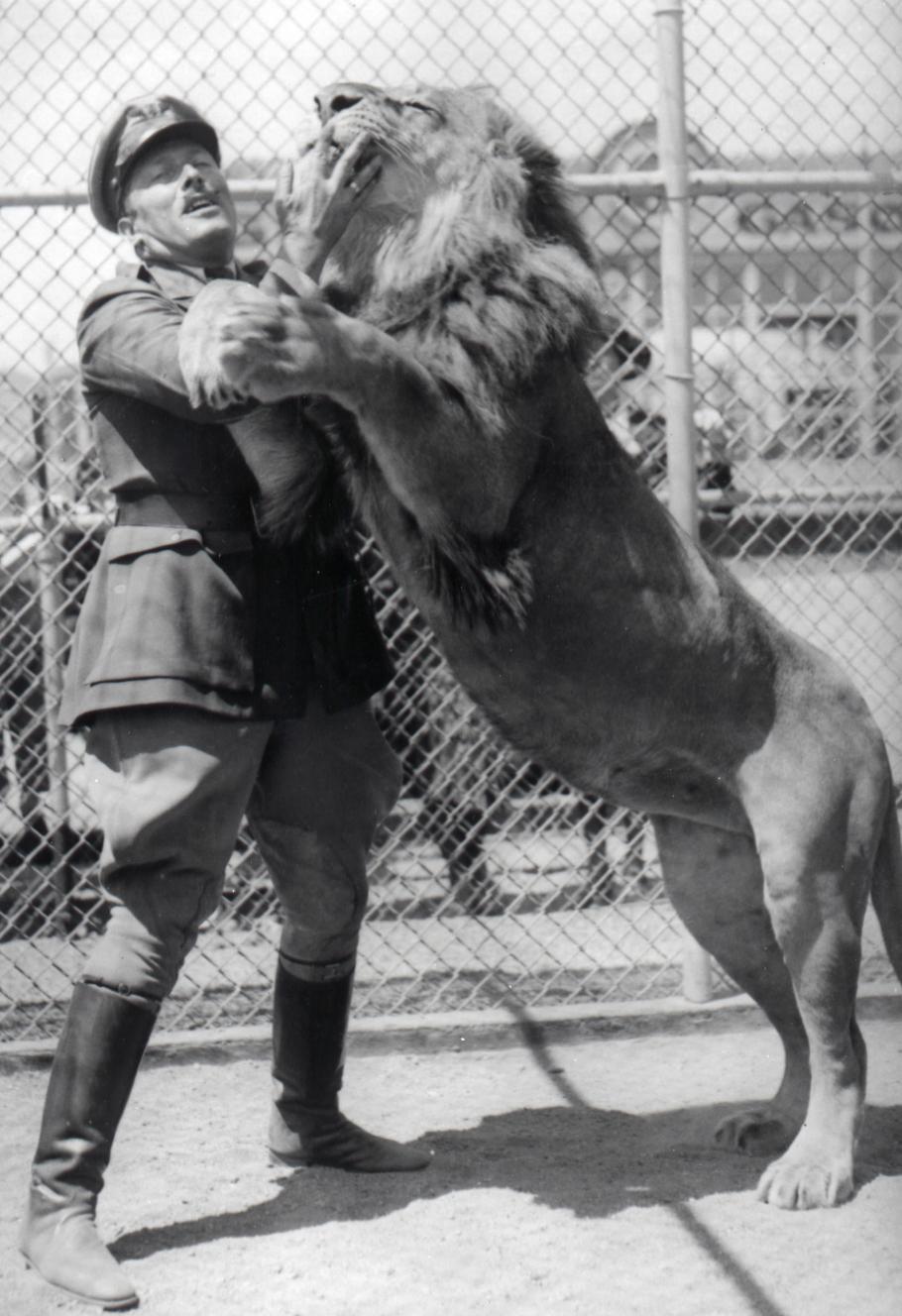
... Before Gilmore grew too large for Roscoe's lap. He was grounded, retiring first to the Turner home in Beverly Hills, and finally ending his days in a California wildlife park, with Roscoe footing his hefty food bills. "For a long time he paid my bills; now it's my turn," Roscoe said.
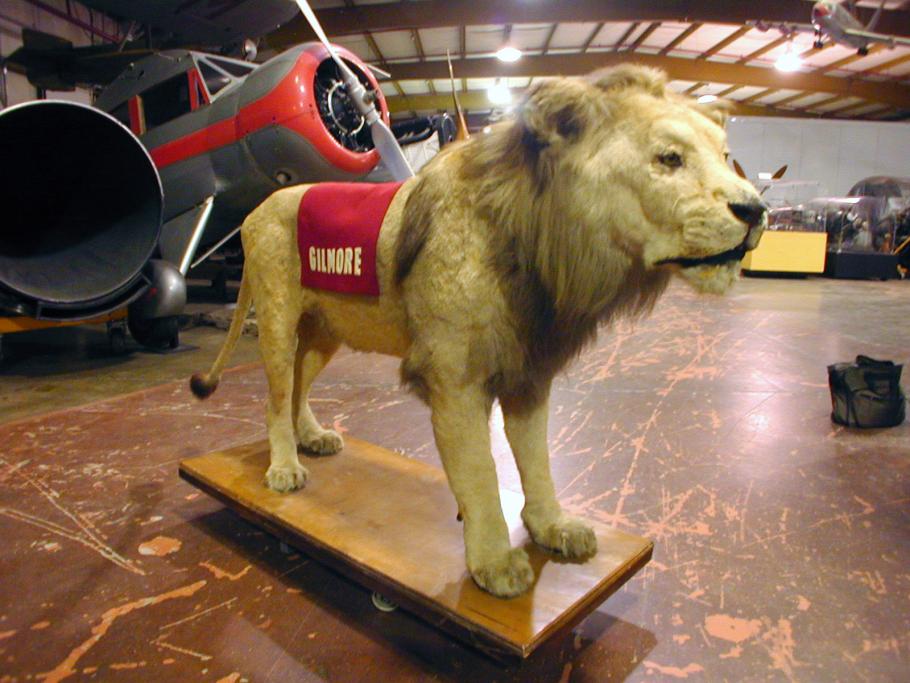
Gilmore died in 1952 at the age of 22. When Roscoe Turner died in 1970, he left Gilmore to the National Air and Space Museum. Turner's Boeing 247-D is exhibited in the National Mall Building, and his RT-14 Meteor racer can be seen at the Udvar-Hazy Center. As for Gilmore, he's currently in storage at the Museum's Paul E. Garber Facility.
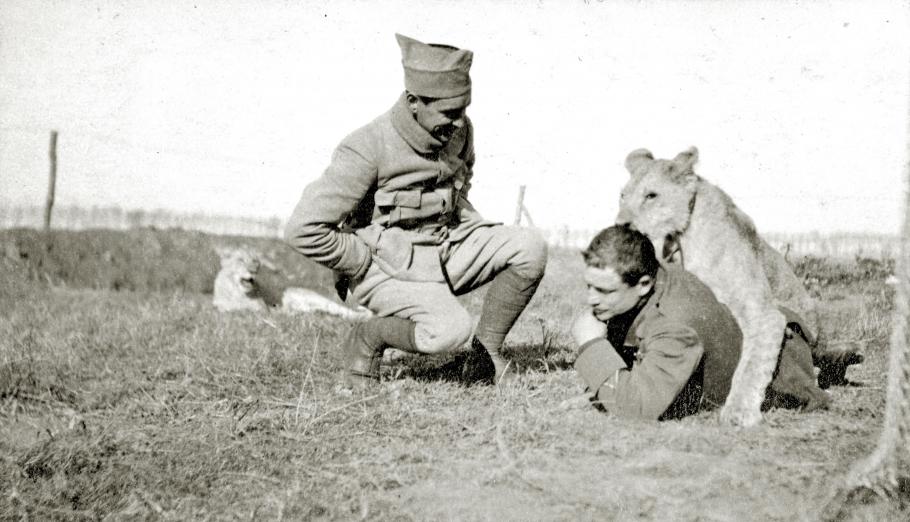
The pilots of the Lafayette Escadrille - Americans flying for the French air service - had a pretty good selection of mascots - dogs, cats, Esther the civet cat, and a fox. But the most famous of the Escadrille's mascots were the lion cubs Whiskey and Soda - that's Whiskey, above, gnawing on the ace Raoul Lufbery as Soda and pilot Douglas MacMonagle watch. Whiskey was "... a cute, bright-eyed baby who tried to roar in a most ferocious manner, but who was blissfully content the moment one gave him a finger to suck." Unfortunately, Whiskey later made the mistake of eating the Escadrille's commander's expensive new uniform cap, and the lions were exiled to the Paris Zoo. But they're commemorated on the Lafayette Escadrille Memorial at Villeneuve l'Etang near Paris with life-sized sculptures.
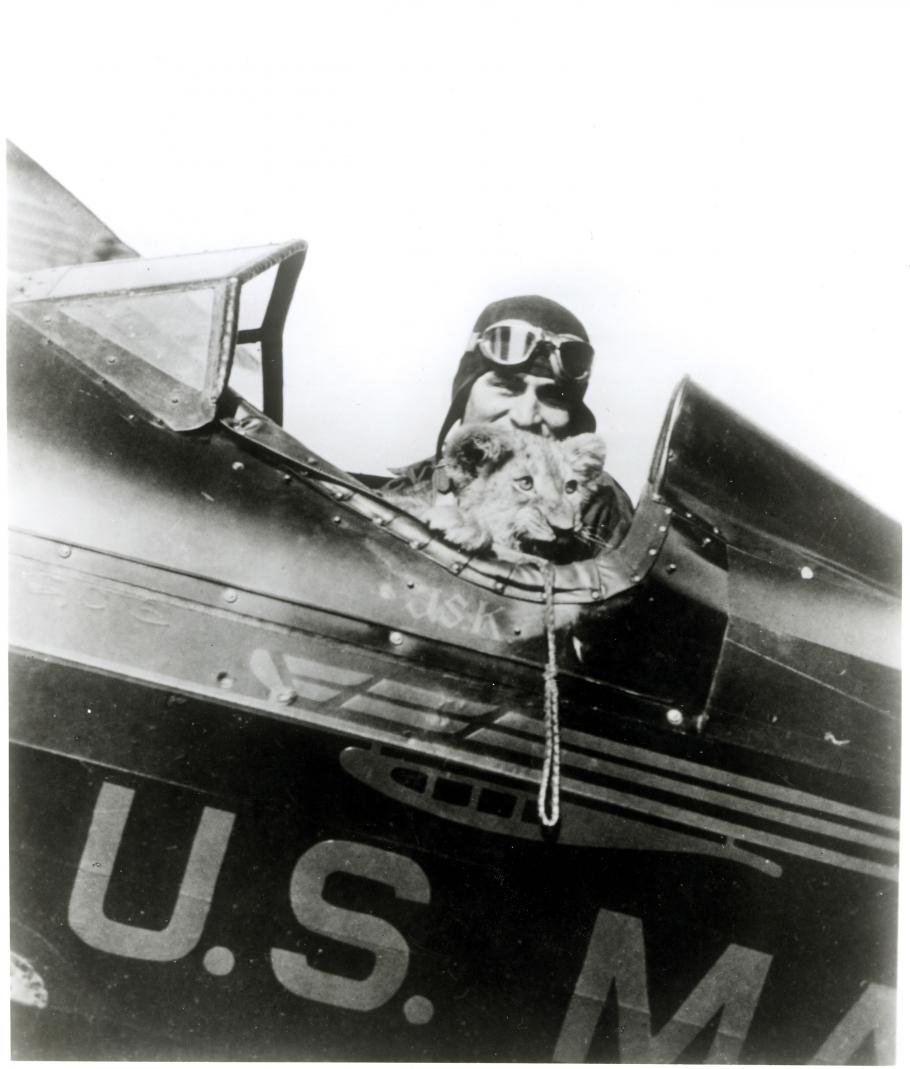
Henry Tyndall "Dick" Merrill (1894 – 1982) and Princess Doreen peer from the cockpit of Merrill's mail plane. Merrill started as a barnstormer, flying a war surplus Curtiss JN-4 Jenny, He later became an air mail pilot, and later still he "flew the Hump" as a civilian pilot during World War II, and serving as Eastern Air Lines ' senior pilot for many years. Merrill spent much of his time on the ground at racetracks, and he named Princess Doreen after a favorite horse.
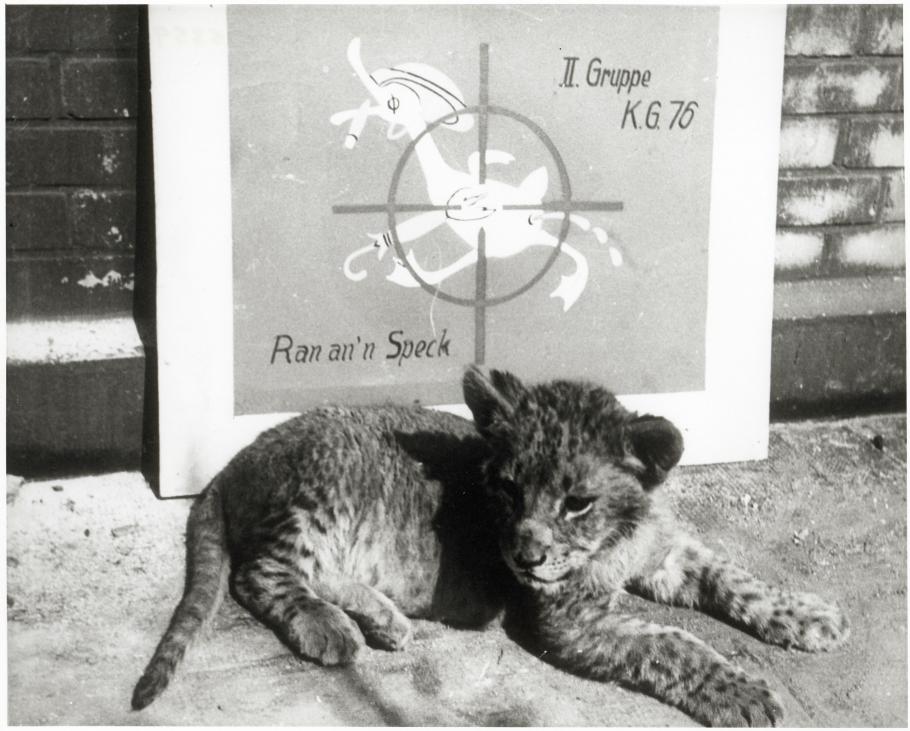
One more lion cub appears in our files - a mascot belonging to Luftwaffe bomber group Kampfgeschwader 76. The group's motto, Ran an' n Speck, means "Let's get the bacon"; possibly the equivalent to our "let's pig out". Whatever it means, Smithsonian visitors now know that the National Zoo doesn't have a corner of cuddly lion cubs - we've got the cute, too. If only we had a couple of air and space-related panda photos in the files, too...
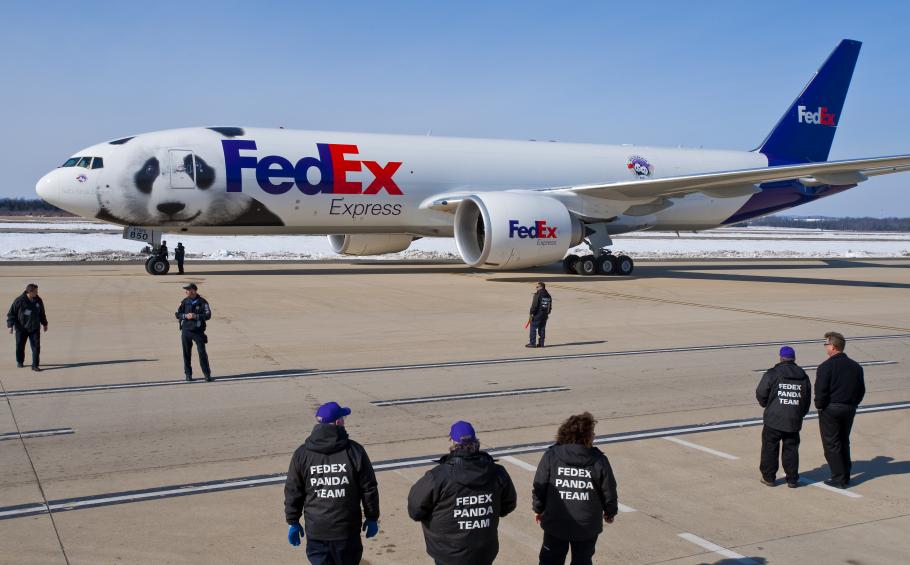
Update: It turns out that we do have a couple of panda photographs in the files - thanks to Dr. Don Moore of the National Zoo for reminding us of the specially emblazoned FedEx Boeing 777 Panda Express which flew the Zoo’s four and a half year old panda Tai Shan to China back in February.